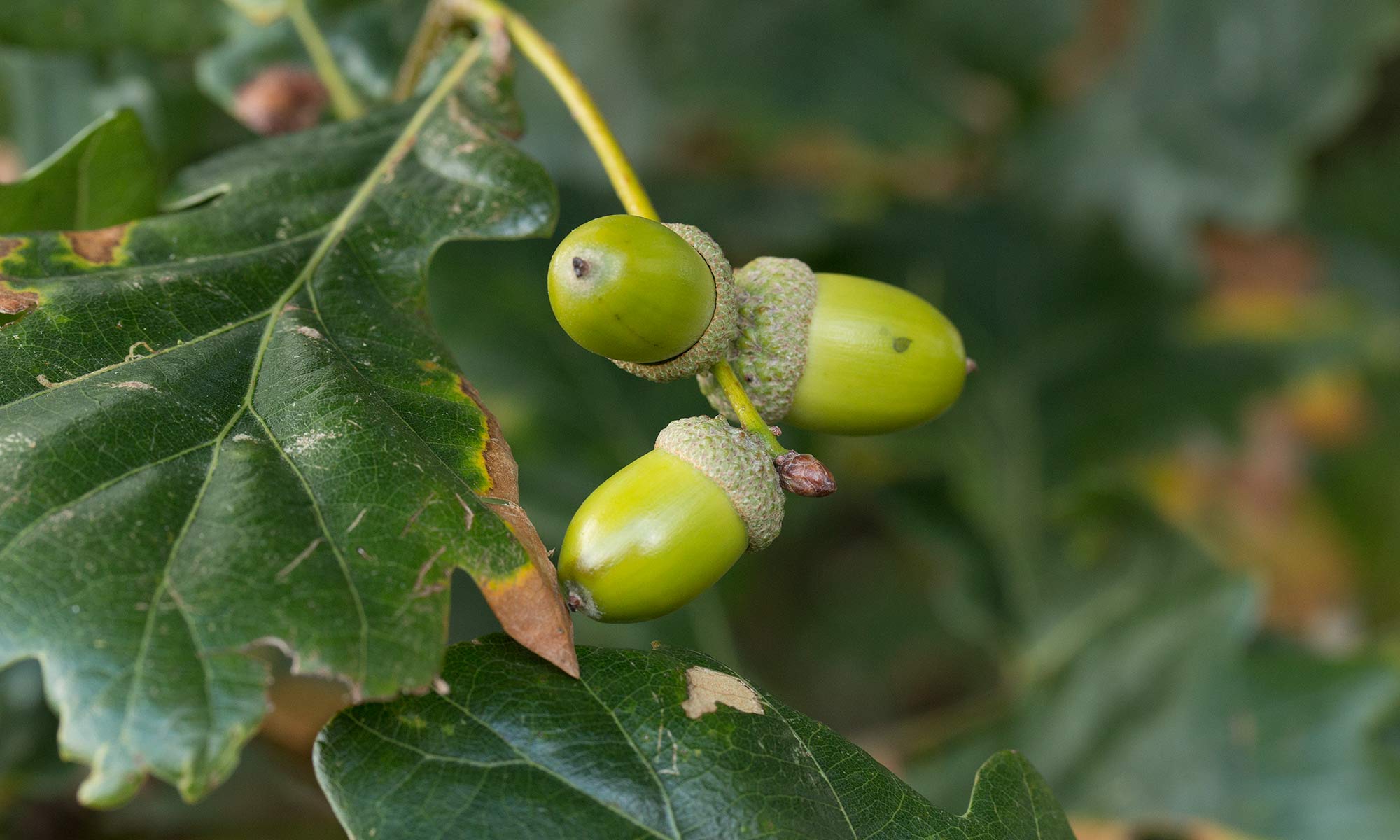
How to grow Pedunculate Oak
Oak is one of the easiest native trees to grow from seed, acorns need no special treatment at all, just planting while fresh. It’s also one of the most satisfying: a great project to do with children, and, with a little care, a tree that could still be standing centuries after you’re gone.
At a glance
- Scientific name
- Quercus robur
- Family
- Beech (Fagaceae)
- Can seed be stored
- No — sow fresh
- Type of dormancy
- None
- Pretreatment
- None — sow as soon as possible, doesn’t tolerate drying
Quick links
Seasonal calendar
Year 1
Year 2
- a Collect: Often after a windy day
- b Sow: Immediately after collection
- c Grow: Grown on until November, traditionally the start of the lifting and planting season, though this window has been shifting and shortening with a changing climate.
| Stage | Year | Month range | Note |
|---|---|---|---|
| Collect | Year 1 | September to October | Often after a windy day |
| Sow | Year 1 | October to October | Immediately after collection |
| Grow | Year 2 | April to November | Grown on until November, traditionally the start of the lifting and planting season, though this window has been shifting and shortening with a changing climate. |
Picking
Acorns can be collected from the ground in the autumn – normally September and October depending how far north or south you are. You’ll often find plenty following a windy day.
Make sure your acorns are healthy. Do this by looking at them and feeling them. Any visibly damaged or with holes are unlikely to grow. Acorns that have fallen onto grass are less likely to have been damaged than those that fall onto hard surfaces.
If you have quite a lot, you can put them into a bucket (or buckets) of water. If they float, they MAY not grow, but this isn’t foolproof! Many that float may still grow.
Try squishing a few that float between your fingers. If they are firm and look healthy, plant them anyway. You could cut some in half to see what they look like inside – watch your fingers! Any signs of insect damage, bruising or rot will probably cause them to fail.
Extraction and storage
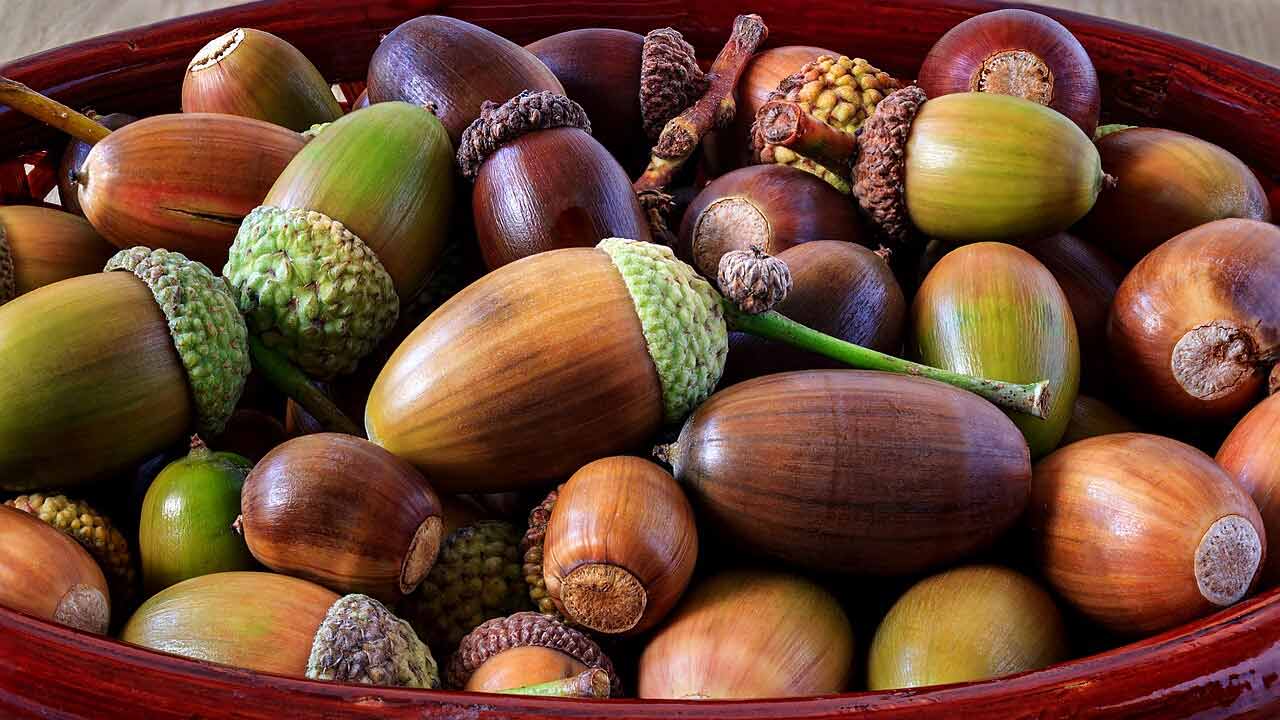
Store acorns in thin layers or in hessian bags indoors for a week or two. They must be kept cool and out of the sun. A fridge is ideal.
Acorns can be separated from any twigs or leaves if you have the time, but it’s not essential.
Long-term storage of acorns is possible, but tricky and rarely done. They need to be dried (but not too much or you’ll kill them) and kept in a fridge. Acorns are recalcitrant seeds, meaning they can’t be dried below a certain moisture content.
Pretreatment
Acorns are not dormant. This means they need no pretreatment for them to grow. In fact, the main difficulty is stopping them from germinating until we want them to! If they are kept in damp conditions, they will grow very quickly, even without soil and you can end up with a tangle of delicate roots.
Sowing
The best time to sow an acorn is immediately after you collect it in the autumn.
It doesn’t matter which way up you plant an acorn. Jays and squirrels have been planting acorns for thousands of years and never worry whether the pointy bit of an acorn is the ‘top’! Just pop them into the ground or some compost, and they’ll work it out themselves.
Plant one or two acorns in a pot filled almost to the top with peat-free compost. Any container will do, but acorns produce long tap roots, so taller pots are better. Root trainers are perfect. Make sure there are drainage holes in the bottom, and cover the acorn with compost (about 2-4cm deep). Protect your acorns from predation! Mice and jays love them, so consider covering them with wire mesh to keep them out.
If you are sowing outside, sow them in good soil to a depth of 5cm and firm. Aim for a density of about 100 plants in a square metre. This means sowing about 200 acorns per square metre.
If you live in a place where you get very cold winters, or are worried about mice nicking your acorns, you could sow 10cm deep and then rake off the extra 5cm in early spring – this protects the acorns from the worst of the frost/mouse attacks.
Growing
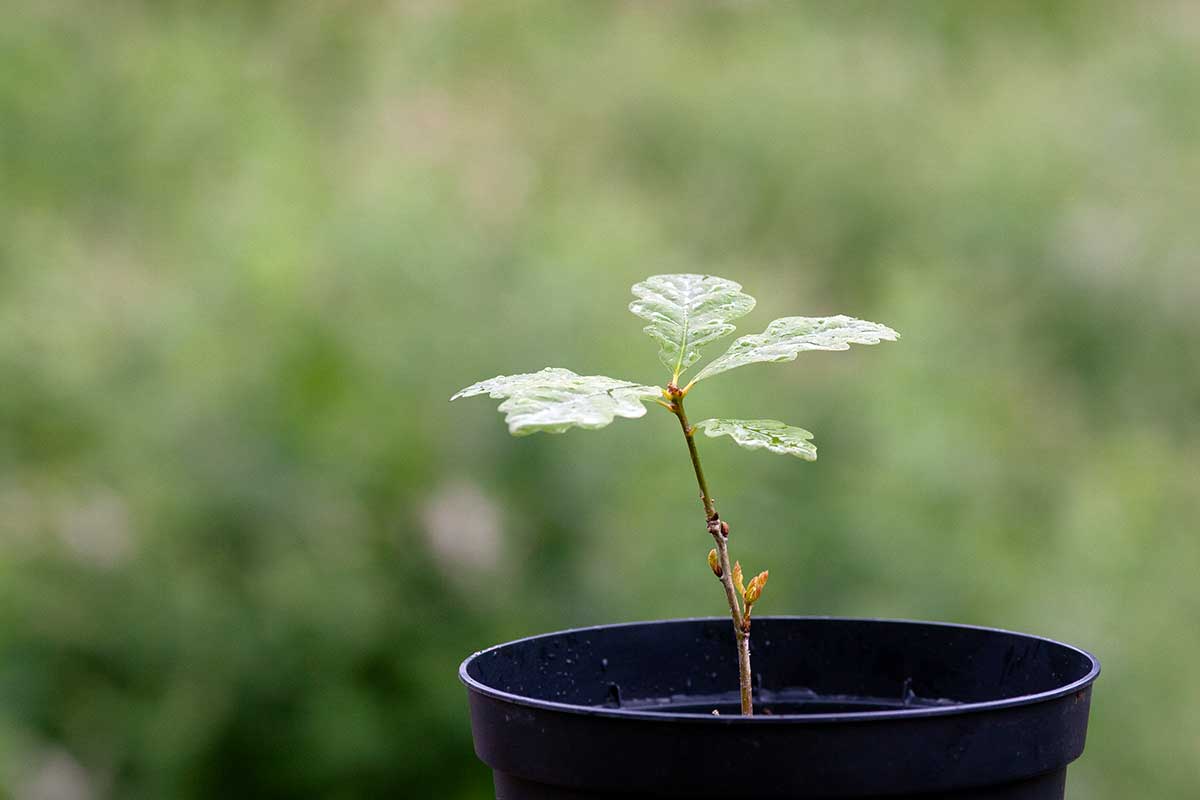
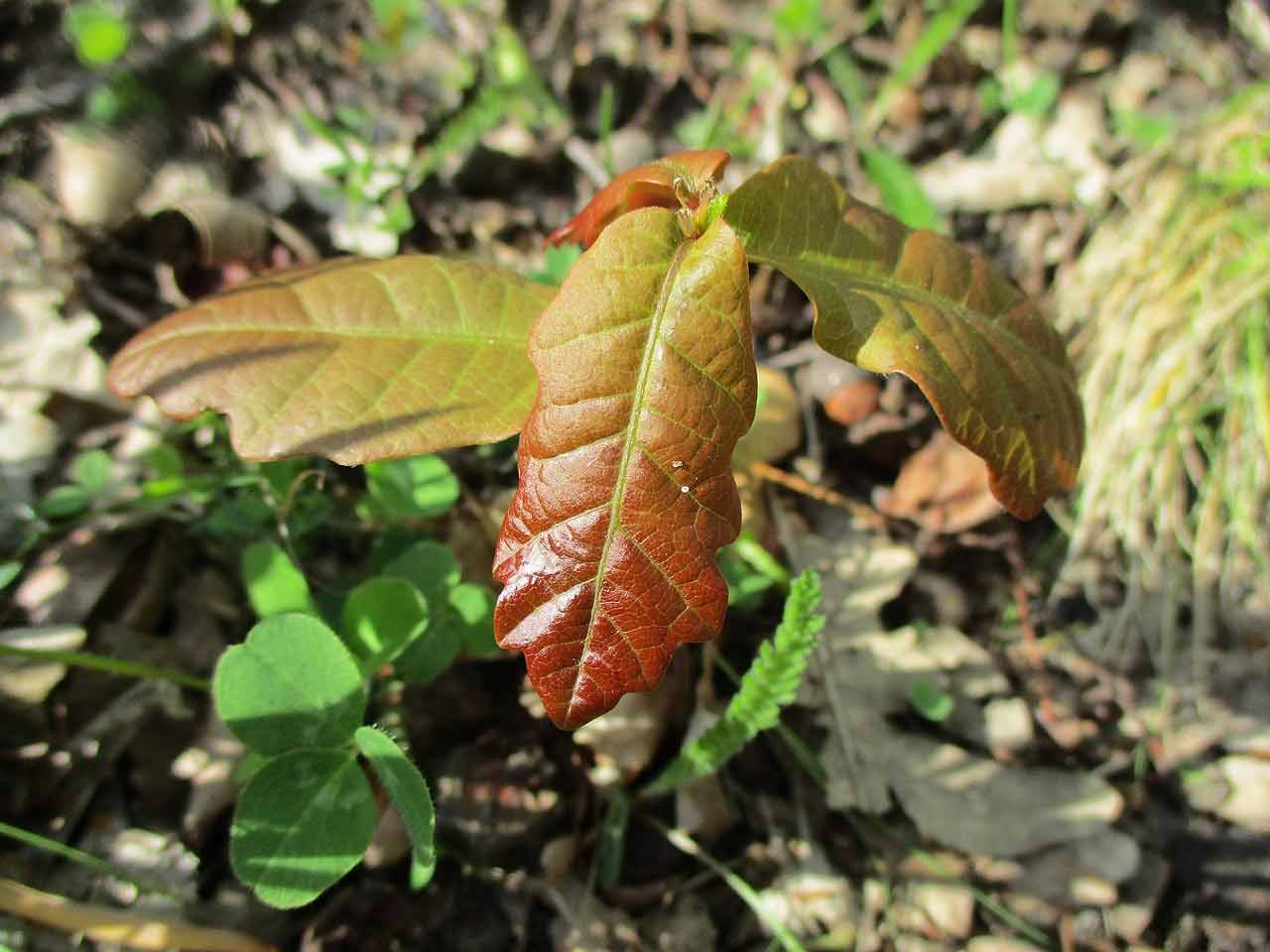
During the winter after sowing, you won’t see anything happening above the soil – it’s all going on down below!
The root grows almost immediately after falling from the tree in autumn. But, it’s likely to be April or May before you see any growth emerge above the soil.
Your oak seedling will grow quite happily in a 2-litre pot, root trainer or the ground for the next two summers. Feed with a liquid fertiliser between May and August to encourage growth, but do not over feed! This can scorch the roots.
Don’t let your pots dry out! Stand them in a shady, sheltered spot, out of doors and keep moist (but not sopping wet) until the seedlings emerge. From then on, water from below by placing the container in a tray of water and let the compost soak it up through the drainage holes. Water plants in seedbeds as needed (rarely needed where I live!).
Planting your new tree(s)

When your Pedunculate Oak is tall enough, it can be planted into its new home. Prepare the site well by clearing away any weeds or grass and make a hole big enough to accommodate the root ball. Plant carefully in the hole, to the same depth as it was in the pot or ground, and firm back the soil. More tree planting details here.